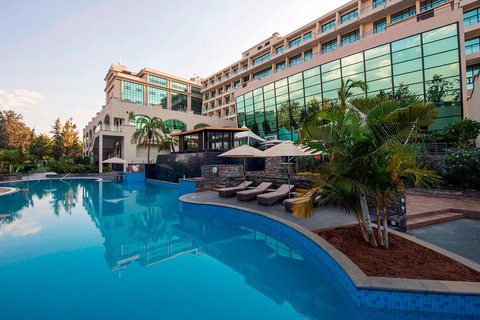
Rwanda has gone from an obscure long-haul destination to a regular British travel feature in the past decade — driven partly by gorilla trekking, partly by the Commonwealth Heads of Government Meeting (CHOGM) held in Kigali in 2022, partly by Rwanda's growing tech-and-conference economy. UK visitors arrive for honeymoons, safaris, conferences, diaspora visits, and the occasional surprise weekend break. This is the complete 2026 guide.
Visa — visa-on-arrival or e-Visa
British passport holders need a visa to enter Rwanda. You have two options:
- Visa-on-arrival — pay USD 50 in cash or by card at Kigali International Airport. 30-day single entry. Adds about 20 minutes to your arrival.
- e-Visa — apply online at irembo.gov.rw at least 72 hours before departure. Same USD 50 fee. Approval letter by email; walk straight through immigration on arrival.
For a longer trip or multi-country East African travel, see the East African Tourist Visa option (USD 100, 90 days, covers Rwanda + Kenya + Uganda).
Flights — London/Manchester to Kigali
No direct flights from the UK to Rwanda as of 2026. The standard routings via one-stop carriers:
- Qatar Airways via Doha (DOH). From Heathrow, Manchester, Birmingham, Edinburgh. The most-used routing for UK visitors. Total trip time 13-15 hours. Round-trip economy typically £600-£950.
- Brussels Airlines via Brussels. Direct daily Brussels-Kigali on the Brussels Airlines side. Useful from London via Eurostar or short Brussels Airlines connection from Heathrow. Total time 12-14 hours.
- Kenya Airways via Nairobi. Heathrow direct to Nairobi, then 1h40 onward. Sometimes the cheapest. Total time 13-16 hours depending on layover.
- KLM via Amsterdam. Reliable daily routing via Schiphol. Total time 13-15 hours.
- RwandAir via Brussels. Less-frequent direct service between RwandAir and London via Brussels. Worth checking if dates align.
- Ethiopian Airlines via Addis. One-stop via Addis Ababa. Often cheapest in fare sales.
Booking advice: book 8-12 weeks ahead for the best rates. Avoid the British school-holiday peaks (late July - August, mid-December) when fares can double. Tuesday/Wednesday departures usually cheapest.
Currency and money
Rwanda uses the Rwandan Franc (RWF). 2026 cross-rate: roughly 1,650 RWF per £1. The reliable approach for UK visitors:
- Bring £200-£400 in USD cash. Convert to RWF at the airport on arrival. The airport rate is fair; the convenience is the time saved versus hunting for an open exchange in town.
- Use a fee-free travel card. Monzo, Revolut, Starling, Wise all work at Kigali ATMs (especially Bank of Kigali, Equity, KCB). Withdrawal limits typically RWF 400,000 per transaction.
- Don't bring sterling cash to convert. GBP is harder to exchange than USD in Kigali. Stick to USD or card.
Card acceptance: international-tier hotels, mid-to-large restaurants, supermarkets, most cafés accept Visa/Mastercard. Small bars, brochettes, moto-taxis, smaller pharmacies are cash or MoMo.
Where to stay
kigali-marriott-hotel isn't on Kisimenti yet. Claim it to appear in our directory.radisson-blu-hotel-convention-centre-kigali isn't on Kisimenti yet. Claim it to appear in our directory.hotel-des-mille-collines isn't on Kisimenti yet. Claim it to appear in our directory.What to do — a 5-day itinerary
- Day 1 — arrival. Land morning (most one-stop flights arrive in the morning). Check in, light lunch at Sole Luna, afternoon nap to beat the jet lag, dinner at Heaven Restaurant.
- Day 2 — Kigali. Morning: Kigali Genocide Memorial (an essential and emotionally heavy 2-3 hours; bring water and time afterwards to sit). Lunch at Nature Kigali. Afternoon: walk Kisimenti or visit Inema Arts Center. Dinner at The Hut Restaurant.
- Day 3 — Volcanoes National Park (gorillas). Drive 2.5 hours to Musanze (Volcanoes NP gateway town). Stay overnight. Gorilla trekking requires advance permit — book through RDB at least 4-6 months ahead. Permit: USD 1,500 per person (premium experience, lasting impression).
- Day 4 — Lake Kivu (optional) or back to Kigali. From Musanze drive 1.5 hours to Rubavu on Lake Kivu for a slower afternoon by the water. Or return to Kigali for a final relaxed day.
- Day 5 — Kigali, departure. Final shopping at Simba, lunch at Khana Khazana or Habesha, late afternoon flight home.
What UK visitors notice
- It's safer than expected. Kigali ranks consistently among the safest African capital cities. Solo female visitors regularly walk at night without incident. The cleanliness contributes — Rwanda's plastic-bag ban means no street litter; Umuganda (community cleaning, last Saturday of month) is genuinely practiced.
- The food range is bigger than the brochures suggest. Italian, Indian, Yemeni, Ethiopian, Argentine steakhouse, plant-forward, Lebanese, Korean, Chinese — Kigali has all of these and most of them are good. Don't restrict yourself to Rwandan food — the city is more international than the marketing implies.
- Internet and phone work everywhere. MTN Rwanda and Airtel Rwanda both run reliable 4G/5G across Kigali. Buy a SIM at the airport. Most cafés have working Wi-Fi.
- The altitude is real. Kigali sits at 1,500m. The first 24 hours can leave you slightly breathless; the gorilla trek at 2,500-3,500m is genuinely physical. Pace yourself.
- The hills are real too. Kigali is hilly. A 1km walk on the map can feel like 2km. Pack walking shoes; don't try to walk between districts in heels.
Practical things
- Plug type: Type C and J (European 2-pin and 3-pin), 230V. Your UK chargers need a UK-to-EU adapter. Bring two — most hotels stock a few but they go fast.
- Time zone: CAT (UTC+2). One or two hours ahead of UK depending on BST.
- Health: No mandatory vaccinations from the UK. Yellow fever certificate required only if you're connecting via an endemic country. Malaria risk in lower elevations (Akagera, Kivu); Kigali itself is low-risk. Antimalarials worth considering for safari trips.
- Language: English universally spoken in hospitality and business. French still common with older Rwandans. Kinyarwanda greetings always welcome.
- Power supply: Reliable in Kigali — outages rare and brief. Hotels and key infrastructure run on backup.
Related: Rwanda visa types in 2026, A week in Kigali itinerary, Best hotels in Kigali for 2026. Browse every hotel on the directory.