Rwanda has one of the easiest business-registration processes in Africa. The World Bank's Doing Business report consistently ranked it among the top three on the continent for ease of starting a business (in years it was published). In 2026 the process is largely online, costs are modest, and a Limited Liability Company can be registered and operational within a single working day. This is the working complete guide.
Before you start — three decisions
- Choose your business type. Sole proprietorship for the simplest single-owner business; Limited Liability Company (Ltd) for any business with two or more owners or where you want liability separation; Branch for a foreign company opening a Rwandan operation; Cooperative for community-owned ventures; NGO/non-profit if non-commercial. Most new businesses choose Ltd.
- Pick a business name. Must be unique. RDB's online portal lets you check name availability before registering — do this first.
- Identify your business sector. Rwanda uses standard sector codes. Get this right at registration — changing later requires re-filing.
Step 1 — register with RDB (the one-stop shop)
The Rwanda Development Board (RDB) operates a Business Registration Service (BRS) that handles incorporation, tax registration (TIN issuance), and social security registration (RSSB) in a single application. Apply online at rdb.rw or in person at RDB headquarters in Kacyiru.
- Cost: RWF 0 for registration itself (free since 2018). Notary and document-preparation costs may apply for some company types.
- Time: 6-12 hours typical processing for online applications. Same-day pickup possible in many cases.
- What you receive: Certificate of Incorporation, Company Registration Number, Taxpayer Identification Number (TIN), RSSB registration number, business sector codes — all bundled in one issuance.
Step 2 — required documents
- Passport or national ID for every director, shareholder, and authorised representative
- Memorandum and Articles of Association for Ltd companies — RDB provides a standard template; modify as needed
- Power of Attorney if registering through a representative
- Lease agreement or proof of business address — Rwanda requires a physical address (PO Box only is not accepted)
- Initial capital declaration (Ltd companies) — there's no minimum capital requirement but the declared amount appears on your registration
Step 3 — register for the EBM (Electronic Billing Machine)
If your business will issue invoices, you'll need an EBM — Rwanda's mandatory electronic invoicing system. Apply through Rwanda Revenue Authority (RRA) once you have your TIN. EBM device or software activation takes 2-5 working days.
Step 4 — open a business bank account
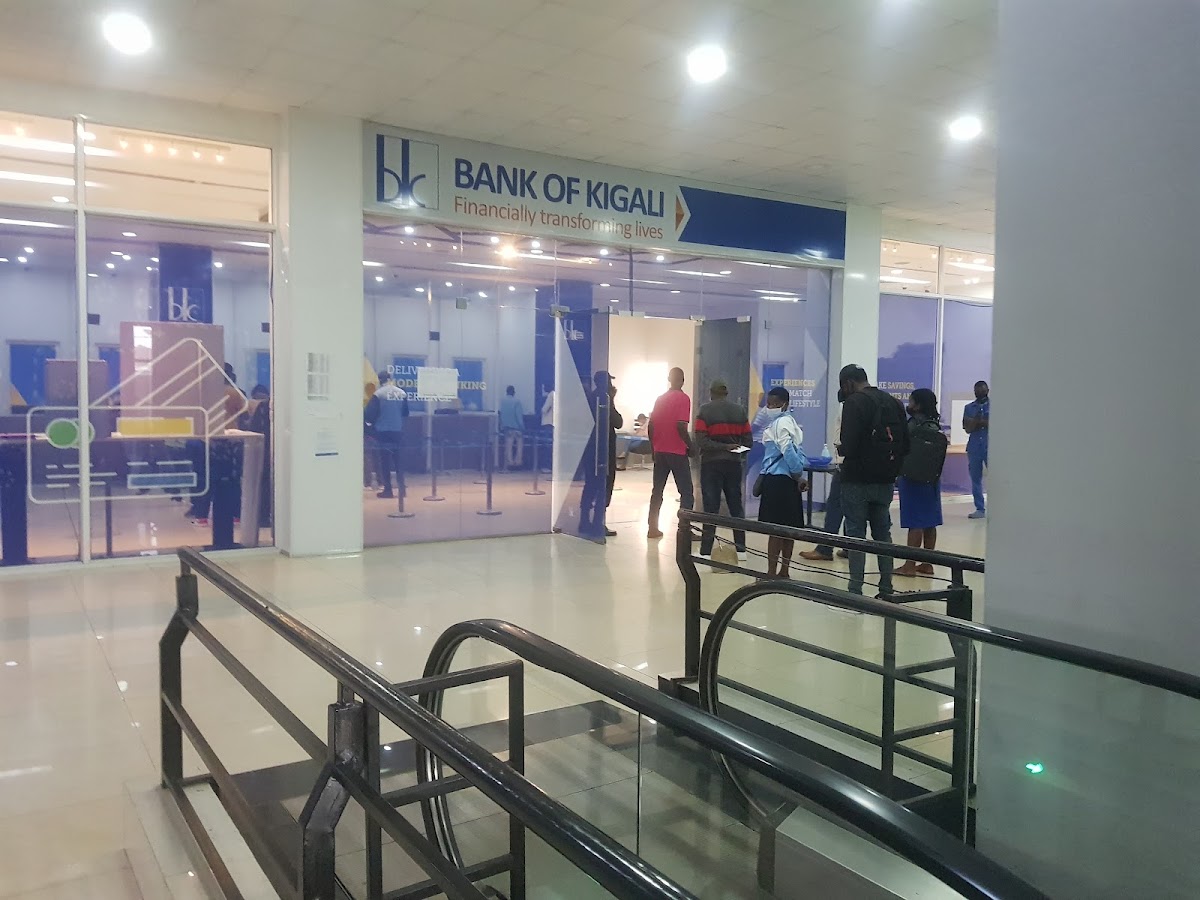
Take your RDB certificate, TIN, and director ID to one of the Rwandan banks. Bank of Kigali, Equity Bank Rwanda, KCB Rwanda, and I&M Bank all offer business accounts. Opening typically takes 1-3 working days. Minimum opening balances vary — RWF 50,000-200,000 is the common range.
Step 5 — register for VAT (if applicable)
VAT registration is mandatory if your annual turnover exceeds RWF 20 million. You can register voluntarily below this threshold. VAT rate is 18% standard. Apply through RRA's online portal.
Step 6 — sector-specific licences
Depending on what you'll sell or operate, additional licences apply. Restaurants need health certification and an alcohol licence (if serving). Salons need a permit from the district. Pharmacies need approval from Rwanda Food and Drugs Authority (FDA). Hotels need a tourism licence. These are separate from the core RDB registration and are usually arranged through the relevant district office or sector regulator.
Total cost and time for a basic Ltd company
- RDB registration fee: RWF 0 (free)
- Notarisation of MOA/AOA (if using a notary): RWF 10,000-50,000
- EBM activation: RWF 0-150,000 depending on choice of device or software-only
- Business bank account opening deposit: RWF 50,000-200,000
- Sector-specific licence fees (if applicable): RWF 20,000-500,000+
- Total fully-set-up cost: RWF 100,000-1,000,000 depending on sector
- Total time from registration to ready-to-operate: 1-5 working days
What new business owners get wrong
- Treating registration as the end-point. Registration is the start. Bookkeeping, EBM compliance, VAT filings (monthly), CIT filings (quarterly), RSSB filings (monthly) all begin from day one of operation.
- Ignoring the sector-specific licences. RDB registration doesn't authorise you to serve alcohol, dispense medicines, or operate as a tour guide. The sector licences are separate.
- Choosing the wrong business type. Sole proprietorship is simplest but doesn't separate personal and business liability. For anything that could face significant litigation risk, Ltd is the better choice from day one.
- Under-declaring initial capital. While there's no minimum, declaring RWF 10,000 looks unserious to banks and partners. RWF 500,000-2,000,000 is typical for a serious small business.
- Missing the RSSB enrolment. Even before you hire your first employee, register the company with the Rwanda Social Security Board — required, takes minutes, prevents future fines.
Foreign-owned businesses — the differences
Foreign nationals can fully own a Rwandan business. The registration process is identical. Additional requirements:
- Work permit for foreign directors actually working in Rwanda. Class B work permit is the standard for investors and directors.
- Investment certificate from RDB (optional but recommended) for tax-incentive eligibility. Threshold for the investment certificate is USD 250,000 cumulative investment over time.
- Bank account compliance — banks may request additional documentation for foreign-controlled entities including source-of-funds verification.
Related: The RDB online business registration walkthrough, Business types in Rwanda compared, RRA tax registration for new businesses. Browse every business on the directory.